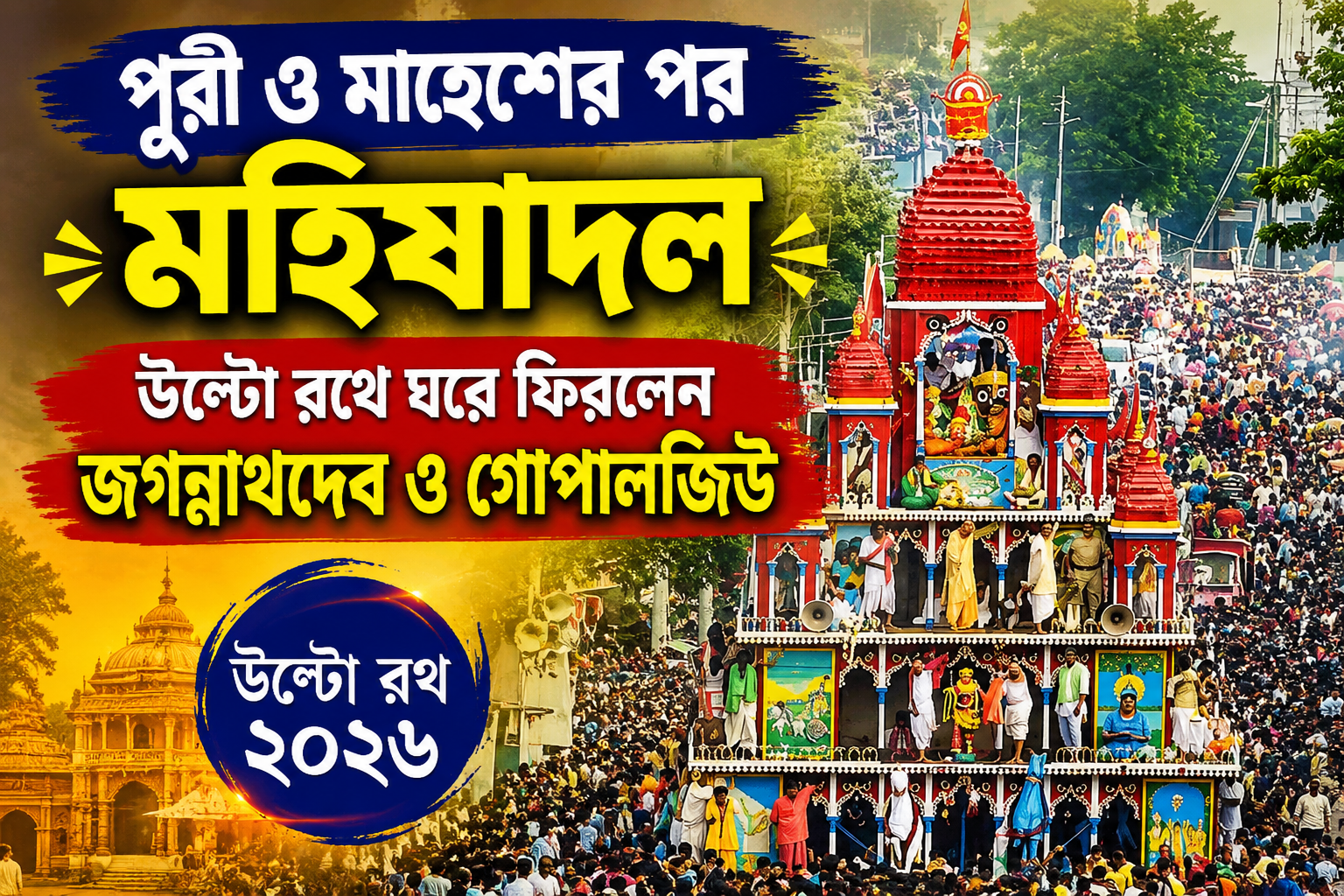
The Wheels of the Chariot Roll in Puri: What is the Real Story Behind the Jagannath Rath Yatra and Why So Much Crowd

Today, Thursday, July 16, the world’s one of the oldest and largest chariot festivals began in Puri, Odisha. Lord Jagannath, along with his elder brother Balabhadra and sister Subhadra, leaves the main temple and travels towards the Gundicha temple in three massive wooden chariots, covering a distance of about three kilometers. According to government sources in Puri and the administration of the Shree Jagannath temple, this year the return journey, known as 'Bahuda Yatra', falls on July 24.
In Hindu temples, established deities are generally not taken outside the sanctum sanctorum. The Jagannath temple in Puri is an exception to this rule, as stated in official descriptions. On the day of the Rath Yatra, the deities themselves descend to meet the devotees — and this is where the main significance of the festival lies, according to devotees.
According to official sources (rathjatra.nic.in) and descriptions from the Shree Jagannath temple, there are three separate chariots for the three deities. The chariot of Jagannath is named Nandighosh — about 45 feet tall, with sixteen wheels, covered in red and yellow cloth. Balabhadra's chariot is Taladhwaja — about 44 feet tall, with fourteen wheels. Subhadra's chariot is Darpadalan — about 43 feet tall, with twelve wheels, adorned in red and black cloth.
Every year, these chariots are made anew from specific types of wood, as mentioned in official descriptions. A hereditary group of carpenters is entitled to perform this work.
Several rituals are performed before the journey. On the full moon of Jyeshtha, the deities are bathed with 108 pots of water, known as Snana Yatra. The common belief is that after this, the deities become 'ill' and remain in seclusion (anabasara) for a few days. On the morning of the Rath Yatra, the deities are placed on the chariot while being swung to the sound of conch shells and drums — this ritual is called Pahandi Bije.
The most talked-about ritual is 'Chhera Pahanra'. In this ritual, the Maharaja of Puri himself sweeps the floor of the chariot with a broom having a golden handle and sprinkles fragrant water, as reported by multiple sources. Even as a king, this humble service before God symbolically conveys — in the eyes of devotees, the king and common people are equal.
After this, thousands of devotees pull the chariot towards the Gundicha temple. It is mentioned in official descriptions that people of all castes, religions, or identities can participate in this pulling.
There are multiple mythological explanations for why this journey takes place. According to a widely circulated story, Jagannath wishes to visit his maternal home (Gundicha temple) with his siblings every year, and this festival is a commemoration of that journey. Another explanation states that Jagannath and Balabhadra take Subhadra on the chariot for a city tour to fulfill her wishes.
Historically, multiple sources claim that the roots of this festival in Puri are centuries old and are linked to the reign of the 12th century. Some researchers also mention the possibility of its indigenous origins from the wooden, human, or animal forms of Lord Jagannath — although there are differing opinions on this.
The Rath Yatra is not unfamiliar to readers in West Bengal. According to Wikipedia, the Rath Yatra of Mahesh in Shrirampur is known as the second oldest and the oldest Rath Yatra in Bengal, which has been celebrated since 1396 AD. Since the 1960s, with the influence of ISKCON, Rath Yatra is now celebrated in various cities around the world.